Bring the exact format.
Record supplier SKU, paper, tip, target fill and finished closure. Use representative material from the intended production supply.
Compare cone formats ↗ Request a demo
APOLLO / PRODUCTION PLANNING
Start with your daily target. See how running time and accepted output affect the number of pre-rolls—and retail packs—you can plan for.
01 / YOUR ASSUMPTIONS
Example values are editable. They are not measured Apollo utilization or yield.
Calculations stay in this browser. No entries are sent or saved.
02 / ILLUSTRATIVE OUTPUT
Estimated individual pieces under your assumptions
This is a planning model, not a validated rate for a selected format, material or weight, a production promise, or an OEE calculation. Packaging labor, downstream capacity and material losses are not modeled. Confirm accepted output and the complete line in a representative trial.
Material fit: main Apollo is for standard ground or milled cannabis flower. Dry kief and dry hash are the only compatible infusion types. Distillate, resin-infused material and extremely sticky flower are not compatible. External coating is a separate process.
Download the blank worksheet · HTML, printable from your browser
03 / MAKE THE NUMBERS MEAN SOMETHING
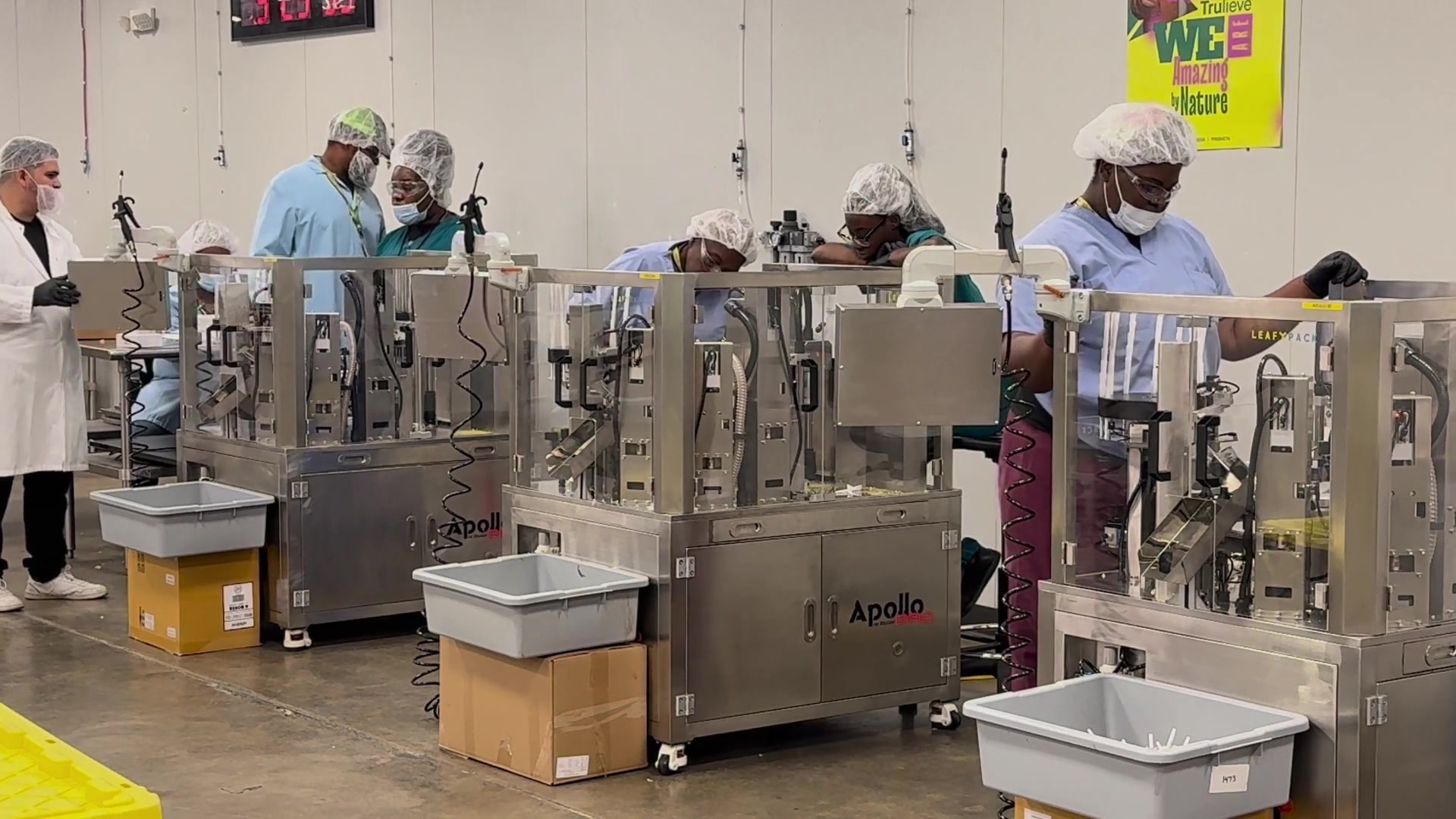
Record supplier SKU, paper, tip, target fill and finished closure. Use representative material from the intended production supply.
Compare cone formats ↗Agree on the acceptance checks, observe the full run and record rejects, interventions and time spent replenishing.
Evaluate the whole line ↗Check packaging capacity, utilities, training, documentation and support before choosing a configuration.
Plan your project ↗ · Read the FAQ ↗